Why Accurate Weighing Matters in Concrete Production
What makes concrete strong enough to support a building for years? The answer is not just good cement or strong sand and gravel. The amount of each material used in the mix matters just as much as its quality.
Concrete is made by combining cement, water, sand, and gravel in carefully measured amounts. If the quantities are not correct, the finished concrete may be too weak, too stiff, or difficult to work with. This can lead to cracks, poor finishing, and costly repairs.
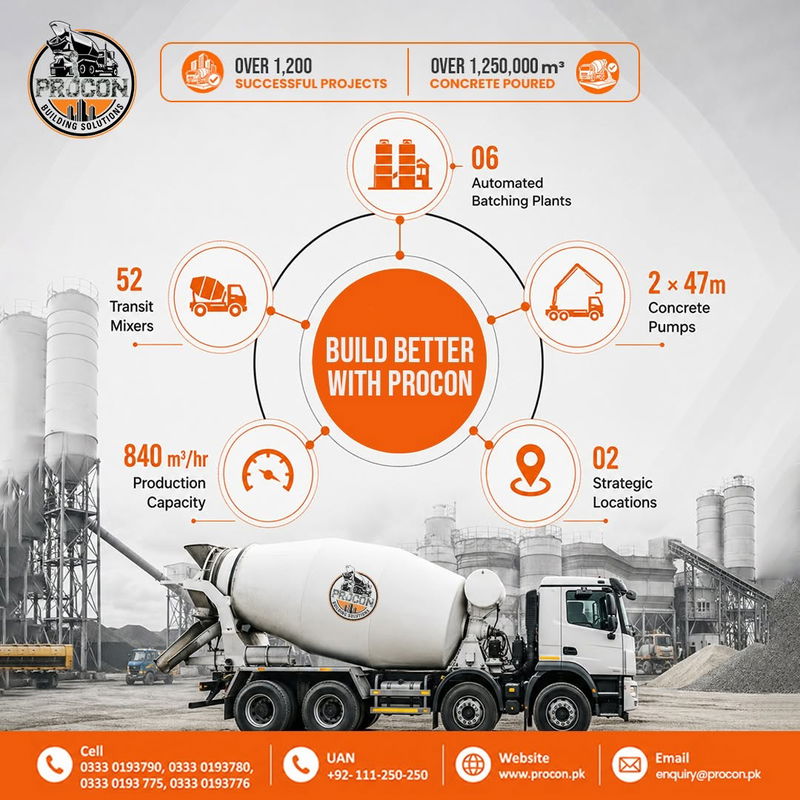
That is why accurate weighing is so important at a concrete batching plant. Every batch needs the right amount of each material to meet the project's requirements. For builders working on homes, offices, roads, and commercial buildings, choosing a dependable supplier of ready made concrete in Karachi is an important step towards maintaining consistent quality.
Let's look at why weighing systems matter and how they help make concrete production more reliable.
1. How Accurate Measurements Help Make Strong Concrete
Making concrete is not simply a matter of mixing materials together. Each ingredient has a specific job, and the amount used affects the final result.
For example, cement binds the other materials together, while water helps the cement harden through a chemical process called hydration. Sand and gravel give concrete much of its structure and strength.
Here is why accurate measurements matter:
The right amount of water: Too much water can reduce the strength of hardened concrete and increase the risk of cracking. Too little may make the mix difficult to place and compact.
The correct amount of cement: Using the amount specified in the mix design helps the concrete meet the required strength and performance standards.
Balanced sand and gravel: The right proportions help create a workable mix and reduce unwanted gaps between particles.
Proper use of additives: Special products called admixtures can improve how concrete flows or control how quickly it sets. They must be measured carefully to work as intended.
When materials are measured correctly, construction teams have a better chance of getting concrete that performs as expected.
2. Why Batching Plant Scales Need Regular Checks
Concrete batching plants use weighing equipment to measure the materials before mixing. Over time, this equipment can become less accurate because of wear, vibration, dirt, or technical problems.
Even a small weighing error can affect repeated batches, especially on large construction projects where substantial amounts of concrete are used.
Regular calibration helps prevent these problems.
Keeping measurements accurate: Calibration checks whether the weighing equipment gives readings that match known reference weights.
Finding problems early: Regular inspections can reveal faulty sensors, damaged parts, or incorrect readings before they affect large quantities of concrete.
Maintaining consistent batches: Accurate weighing helps the plant follow the approved mix design from one batch to the next.
Supporting quality tests: When materials are measured properly, engineers can better assess whether the concrete meets the required standards.
Calibration alone does not guarantee strong concrete. The plant must also use suitable materials, follow the correct mix design, and maintain proper mixing and delivery practices.
3. How Accurate Weighing Saves Time and Money
Weighing systems do more than help control concrete quality. They can also reduce waste and make production more efficient.
When the quantities are wrong, a batch may fail a quality check or become difficult to use on-site. This can cause delays, wasted materials, and extra costs.
Accurate weighing helps in several ways:
Less material waste: Measuring ingredients correctly reduces the risk of using too much cement, water, or other materials.
Fewer rejected loads: Consistent batching can reduce the chances of concrete arriving at a site with the wrong mix or unsuitable workability.
Better planning: Reliable measurements make it easier to estimate how much material is needed for each job.
Fewer on-site adjustments: Concrete that arrives with the expected consistency is easier for workers to manage, provided it is delivered and handled properly.
For large projects, these small improvements can make a noticeable difference to daily work and overall costs.
4. What to Look for in a Ready-Mix Concrete Supplier
The quality of concrete depends on more than the weighing equipment alone. The supplier's materials, production methods, quality checks, and delivery arrangements all play a part.
Before choosing a supplier, consider these points:
Quality control: Ask how the supplier checks raw materials and monitors the concrete mix.
Accurate batching: Find out whether the weighing equipment is inspected and calibrated regularly.
Suitable concrete mixes: Make sure the mix meets the strength and performance needs of your project.
Reliable delivery: Concrete should arrive at the site when the construction team is ready to use it.
Testing and documentation: Ask whether relevant test results and delivery records are available for your project.
Taking time to ask these questions can help you choose a supplier that understands the importance of consistent concrete quality.
Conclusion
Accurate weighing is an important part of making strong and reliable concrete. When cement, water, sand, gravel, and admixtures are measured correctly, construction teams can better control the quality of each batch and reduce unnecessary waste.
Regular calibration helps keep weighing equipment accurate, while proper mixing, delivery, placement, and curing help the concrete achieve its intended performance.
If you are planning a construction project in Karachi, explore ready made concrete in Karachi to learn more about concrete supply options. Choosing suitable materials and a supplier that takes quality control seriously can help your project stay on track and meet its construction requirements.
Survey No. 423, Ibrahim Hydri, behind Bol head quarter, Korangi creek road, Karachi-74900
+92 21 111 250 250
Comments
No comments yet. Be the first to comment!