Why Concrete Mix Homogeneity Matters for Consistent Structural Performance
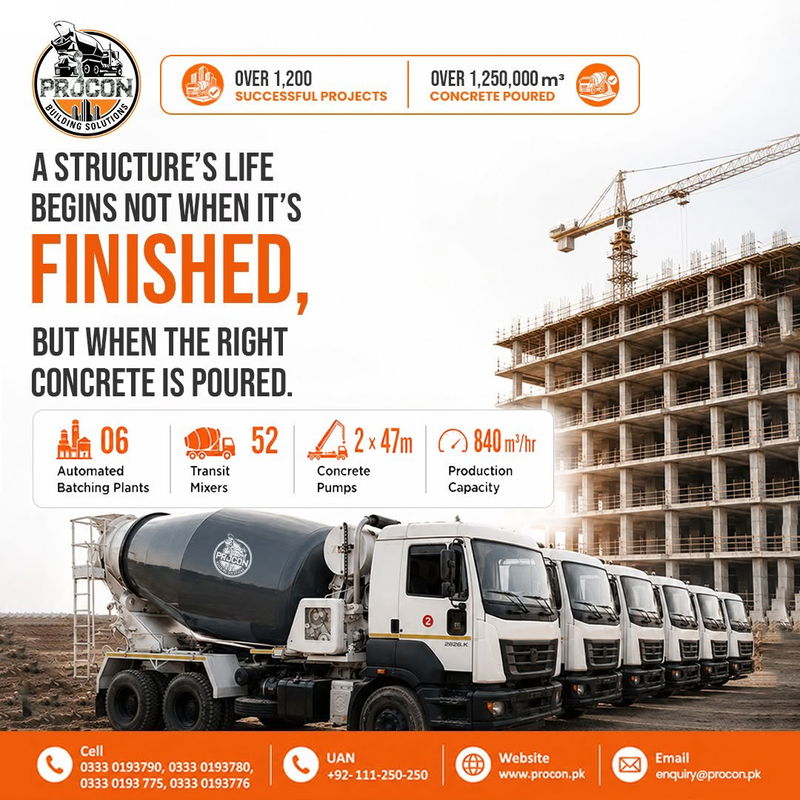
In modern civil engineering and commercial construction, the safety, longevity, and structural capacity of any built asset depend heavily on the uniform composition of its construction materials. Concrete is frequently treated as a simple mixture of cement, water, sand, and coarse aggregate, but it is actually a highly complex composite material. For this composite to bear extreme structural loads uniformly across a high-rise foundation, bridge deck, or heavy industrial floor, every single cubic meter must exhibit absolute mix homogeneity. When concrete lacks uniformity—whether due to improper batching, aggressive transit segregation, or inadequate mixing time—its internal physical properties vary wildly from one point to another. These inconsistencies create localized weak spots, high internal stress concentrations, and premature structural deterioration. For developers and contractors striving for uncompromised material reliability and structural excellence, sourcing high-grade ready mix concrete in Karachi ensures that every batch is scientifically proportioned and thoroughly blended to achieve total structural homogeneity.
The Microscopic Mechanics of Homogeneity
Mix homogeneity refers to the uniform distribution of all constituent materials throughout the batch. Cement paste must coat every individual particle of fine sand and completely envelop the coarse aggregate skeletal matrix without pockets of excess air or trapped agglomerations.
When homogeneity is successfully achieved, several vital material characteristics are secured:
Uniform Compressive Strength: Every core sample extracted from a homogeneous pour will yield consistent compressive test results, matching the engineer's design calculations.
Controlled Porosity and Permeability: A well-distributed paste matrix minimizes internal voids, preventing the ingress of aggressive moisture, chlorides, and atmospheric carbon dioxide that cause rebar corrosion.
Consistent Workability and Flow: Homogeneous concrete flows smoothly around congested reinforcement bars and into complex formwork geometries without requiring unauthorized water additions on site.
The Perils of Inconsistent Batching and Segregation
When concrete processing fails to maintain strict homogeneity, the physical consequences are immediate and severe. If mixing times are too short or if transit mixer blades are worn out, the batch suffers from segregation, where heavier coarse aggregates settle away from the lighter cement paste mortar.
This lack of uniformity triggers critical structural defects:
Honeycombing and Voids: Pockets lacking sufficient mortar leave coarse stones loosely interlocked, causing honeycombing that drastically weakens load-bearing columns.
Differential Shrinkage and Cracking: Variations in water and cement distribution across a single structural element cause uneven drying shrinkage rates, leading to severe surface cracking and internal micro-fissuring.
Loss of Durability: Areas choked with excess water and fine laitance exhibit high porosity and low abrasion resistance, failing prematurely under operational wear.
Maintaining Quality Through Advanced Plant Control
Achieving true concrete homogeneity requires advanced industrial automation and strict quality control protocols from raw material intake to final discharge. Automated batching plants utilize precise load cells, digital water meters, and computerized mixing cycles to eliminate human error. Furthermore, continuous monitoring of aggregate moisture and computerized batch sequencing ensure that every load leaving the facility maintains an identical water-cement ratio and particle distribution. Partnering with established industry leaders such as ready mix concrete in Karachi gives construction teams the advantage of advanced batching technology and expert in-house technical support, guaranteeing that material uniformity is never left to chance.
Conclusion
Concrete mix homogeneity is the fundamental cornerstone of consistent structural performance and long-term durability. By ensuring the uniform distribution of cement paste, water, and aggregates throughout every batch, construction professionals can eliminate internal weaknesses and protect structural integrity. Prioritizing rigorous manufacturing standards and trusted supply partnerships ensures that every concrete structure achieves predictable strength, safety, and resilience against demanding environmental conditions.
Survey No. 423, Ibrahim Hydri, behind Bol head quarter, Korangi creek road, Karachi-74900
+92 21 111 250 250
Comments
No comments yet. Be the first to comment!